
Statistics and Demographics
Gathering prevalence data on harm caused by psychological therapies can be a difficult task, and unfortunately, the absence of data doesn’t mean that harm is rare. Additionally, there is a tendency to connect harm with therapists who are not well-qualified, although research indicates that professionals with more qualifications and experience are more likely to cause harm (Casemore, 2001). This inclination is also apparent in other studies where only a small number of therapists were inexperienced, while most of them had ample experience in the field, with some even serving on ethics committees or authoring ethical papers.
The data that is around is more related to psychologists and psychiatrists and will be explored here in more detail. Over the course of 30 years in their profession, around 20 out of every 100 psychologists should expect to receive a complaint from the public, with two of them receiving serious misconduct complaints that could result in losing their registration. To prevent malpractice, psychologists should consider having regular consultations with their peers, establishing high-quality practice standards, and maintaining professional boundaries (Grenyer & Lewis, 2012)
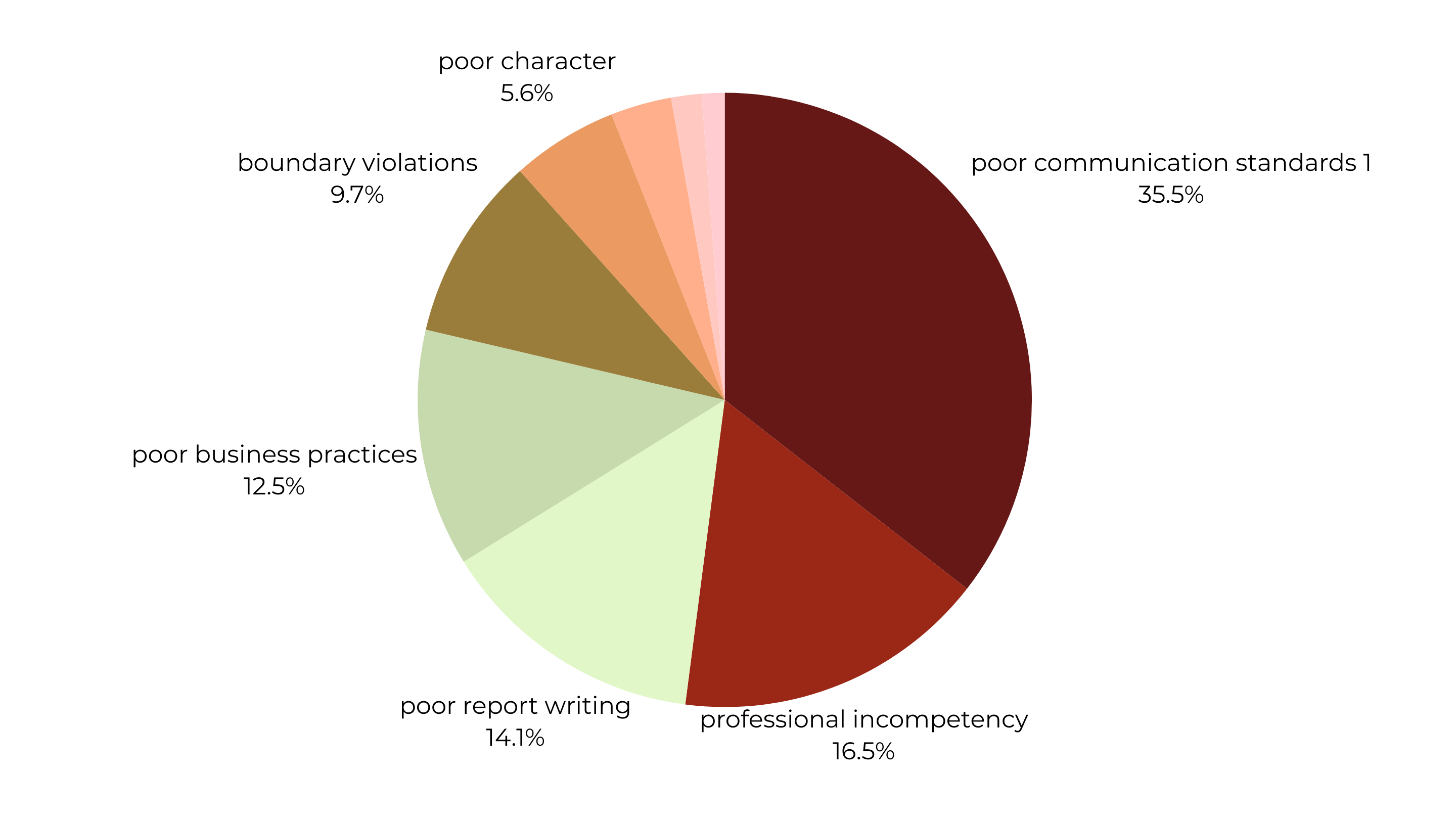
The most frequent type of misconduct reported was in relation to poor communication standards (35.5%). Other complaints were in relation to professional incompetency (16.5%), poor report writing (14.1%), poor business practices (12.5%), boundary violations (9.7%), poor character (5.6%), registration status (3.2%), impairment (1.6%), and the inappropriate use of specialist titles (1.2%)

Males working in the mental health field were 2.5 times more likely to attract a complaint, were four times more likely to attract multiple complaints, and were three times more likely to have a serious complaint lodged against them.
RISK FACTORS FOP COMPLAINTS:
Grenyer & Lewis (2012) found a number of characteristics that professionals who received complaints had in common such as:
- Working in small private practices or isolated locations
- Practices that experience a lack of collegial support and appropriate supervision are more likely to engage in unethical boundary-crossing behaviours.
- Living and practising in rural or regional geographical locations may find maintaining professional boundaries more challenging, as they are more likely to experience certain encounters with clients such as accidental meetings, confidentiality, and overlapping social relationships.
- Other boundary violations, such as financial dealings, confidentiality breaches, excessive self-disclosure, extending of session times, phone calls between sessions, meetings outside the office, shared activities, etc., can also be potentially harmful to the well-being of the client.
This does not mean that you can not work in a regional area in private practice, but it does mean that there are extra considerations that you need to put in place to support maintaining professional standards and navigating the unique challenges that pertain to these situations. Suggestions include:
- Regular group and individual supervision so you are not practising in isolation.
- Build a support network with other practitioners so that you can maintain contact, bounce ideas off them, and debrief when necessary.
- Have extremely clear policies and guidelines around dual relationships. Be clear with what you do and do not feel comfortable with, and stick with that.
- Do not use your personal phone number for the clinic, use a service such as UConnect or the number from Psychology Today or get another phone.
- Do not give free sessions over the phone or set the standard of going over time as the normal
- Do not be the first to engage with clients in public, if they engage with you, be polite, but do not look to start a conversation or casual conversation with them
- Use an Ethical Decision Making Model (EDM) when navigating ethical decisions (more on this later)
In conclusion, while gathering prevalence data on harm caused by psychological therapies can be challenging, it is crucial to acknowledge that harm is not rare. The data available suggests that mental health professionals are at risk of receiving complaints from the public, particularly in relation to poor communication standards, professional incompetency, and poor report writing. It is also important to note that professionals working in small private practices or isolated locations and those experiencing a lack of collegial support and appropriate supervision are more likely to engage in unethical boundary-crossing behaviours. Therefore, it is essential for practitioners to establish high-quality practice standards, maintain professional boundaries, and have regular consultations with their peers to prevent malpractice. Additionally, mental health professionals practising in regional or rural areas should take extra precautions and implement strategies to navigate the unique challenges that pertain to these situations.
References
Casemore, R (2001) Surviving Complaints against Counsellors and Psychotherapists: Towards Understanding and Healing. PCCS Books.
Grenyer & Lewis. (2012). Prevalence, Prediction, and Prevention of Psychologist Misconduct. Australian Psychologist. 47. 68-76. 10.1111/j.1742-9544.2010.00019.x.